
Rewards given to an employee have always involved the balance between what the organisation provides and what the employee takes away.
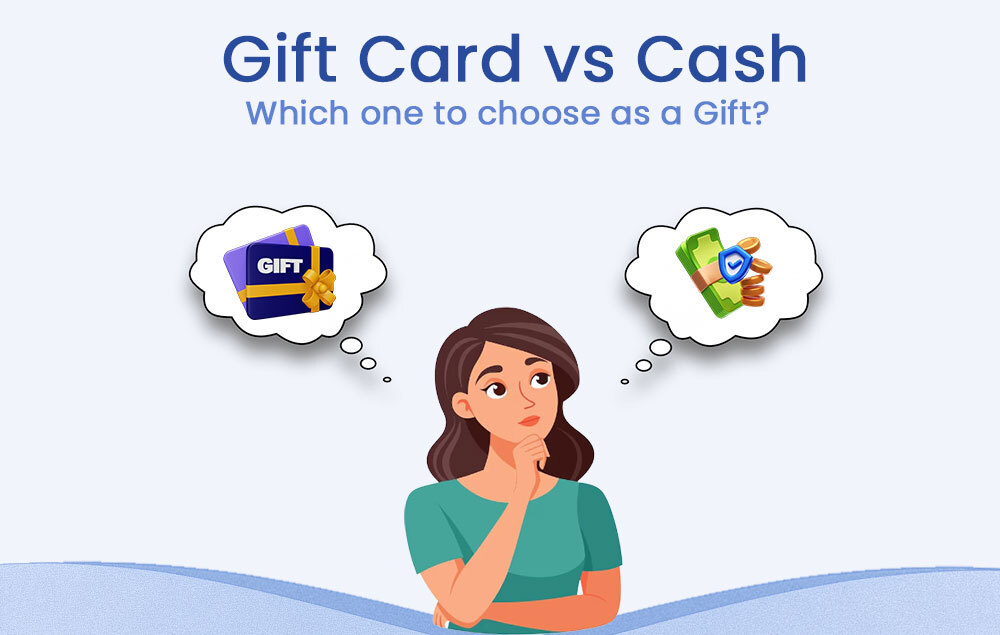
Two of the most popular forms of rewards used for many years by HR teams are cash and gift cards. Both are worthy. Both are well received. Both are very important.
But now that companies are investing in employee experience so much more, a question we must consider is:
Not all rewards have the same psychological impact.
They might be the same monetary value, e.g. 5,000 in cash, and 5,000 on a gift card, but they will never evoke the same emotion in employees.
One disappears into month-end expenses.
The other could result in an employee being able to share it with family members over a nice meal, buy something they’ve wanted for a long time, take a vacation or something else that they are still reminiscing about months later.
According to a study undertaken by Incentive Gift Card Council (IGCC) and Incentive Research Foundation (IRF) employees preferred gift cards to cash rewards by 5 to 1 ratio because “gift cards are a more thought out, specific, structured and emotional reward than cash”, that is typically seen as part of salary.
This distinction is important now because by 2026, employee rewards won’t just be valued based on what value the company is able to give to employees but how well the reward motivates the employee, keeps them engaged, and allows them to feel recognised.
This is why the question as to whether gift cards are better than cash rewards for employees is something HR professionals should keep top of mind in 2026.
The Age-Old Debate: Cash vs Gift Cards
If you ask employees whether they would like extra money, most will say yes.
If given the choice, most employees would prefer greater flexibility in how they receive rewards.
This is why the cash versus gift card debate has persisted for years.
On the surface, cash appears to be the most practical reward. It offers complete flexibility and immediate value. Employees can spend it however they choose.
Gift cards, meanwhile, are often viewed as a more curated reward experience. Rather than simply adding money to an account, they create an opportunity for employees to choose something specific for themselves.
The interesting part is that both rewards deliver value, but they deliver it differently.
Cash rewards optimise for financial utility.
Gift card rewards optimise for choice, experience, and engagement.
This distinction is becoming increasingly important because employee expectations have evolved.
In other words, the debate isn’t about which reward is worth more.
It’s about which reward creates the strongest connection between recognition and employee motivation.
Psychology of Rewards: Why Tangibility Matters
It’s often assumed that when something has worth, it will drive people to act. Yet that belief misses a key truth about what really pushes effort forward.
Truth is, what people feel when they get recognition can weigh just as heavy as the prize.
Money feels different when it comes from a bonus instead of a paycheck. That idea sits at the heart of what some researchers call mental accounting. Where cash lands in your mind often depends on where it came from. A gift might seem freer to spend than salary, even if amounts match. Feelings shape these choices more than logic does. How you plan to use money changes its weight too. Rent paid feels heavier than concert tickets bought. Each dollar carries invisible tags based on origin and purpose. These labels aren’t real, yet they guide spending quietly. Mental shortcuts like this help make sense of daily trade-offs.
For HR leaders, this changes how things might unfold.
A bonus can help yet soon blurs into regular money movements.
A person getting a gift card usually follows another path
Exploring available options
Choosing something meaningful
Redeeming the reward
Experiencing the purchase or service
That instant of being seen lingers, reaching past when the prize came into hand
As noted earlier, everything here repeats what was said before
Why Memorable Rewards Often Create Greater Impact
HR leaders often evaluate rewards based on budget allocation, redemption rates, or participation levels. While these metrics are important, they don’t always capture how employees experience a reward.
Behavioural economists have long observed that people attach different emotional value to rewards depending on how they are received and used. A cash reward may quickly become part of routine spending, while a reward linked to a specific purchase, experience, or personal choice is often remembered for longer.
This distinction matters because recognition is ultimately about reinforcing positive behaviours and making employees feel appreciated. The more memorable a reward experience is, the stronger the connection employees are likely to make between their achievement and the recognition they received.
Research consistently shows that employees who feel recognised are more engaged, more productive, and more likely to stay with their organisations. For HR leaders, this means the effectiveness of a reward isn’t determined solely by its monetary value, but also by the experience it creates.
The takeaway?
The most effective rewards don’t just deliver value. They create moments of appreciation that employees remember.
Comparison: Gift Cards vs Cash Rewards
Both reward formats have strengths. The key is understanding which aligns best with your programme objectives.
|
Factor |
Cash Rewards |
Gift Card Rewards |
|
Financial Flexibility |
Excellent |
Excellent |
|
Personalisation |
NA |
Excellent |
|
Employee Choice |
NA |
Excellent |
|
Emotional Impact |
NA |
Excellent |
|
Memorability |
NA |
Excellent |
|
Recognition Value |
Good |
Excellent |
|
Administrative Ease |
Good |
Excellent |
|
Employer Branding Opportunity |
NA |
Excellent |
|
Remote Workforce Suitability |
Good |
Excellent |
|
Scalability |
Good |
Excellent |
However, HR leaders should consider another framework.
The Three Layers of Reward Value
Most organisations focus only on Layer 1.
Layer 1: Monetary Value
How much is the reward worth?
Both cash and gift cards perform similarly.
Layer 2: Emotional Value
How appreciated does the employee feel?
Gift cards often perform better because they feel intentional and personalised.
Layer 3: Memory Value
Will the employee remember the reward six months later?
This is where gift cards often create an advantage.
Because while money gets spent, experiences tend to be remembered.
For modern recognition programmes, memory value may be one of the most overlooked drivers of engagement.
When Cash Works Better (Honest Edge Cases)
Cash rewards may be preferred for annual bonus payouts or financial assistance initiatives, where employees need complete flexibility in how they use the reward.
However, these are specific use cases. For most recognition programmes, festive gifting, milestone celebrations, and spot awards, gift cards offer the added advantage of choice, personalisation, and a more memorable employee experience.
Why Gift Cards Win for Most Indian Organisation in 2026
If cash offers unmatched flexibility, why are so many organisations increasing their investment in gift card rewards programmes?
Because the workplace has changed.
Recognition Has Become a Strategic Priority
A decade ago, recognition was often viewed as a nice-to-have initiative.
Today, it’s directly linked to engagement, retention, culture, and employee experience.
As hybrid and distributed work become more common, organisations need new ways to make appreciation visible.
Gift cards help create recognition moments that feel deliberate and memorable.
Choice Is the New Personalisation
One challenge HR teams face today is workforce diversity.
A Gen Z employee, a senior manager, and a frontline worker may all value different rewards.
Trying to choose a single reward for everyone often results in a reward that excites no one.
The future of personalisation isn’t selecting better rewards.
It’s providing better choices.
Gift cards allow employees to decide what matters most to them.
Speed Matters More Than Ever
Recognition loses impact when it arrives weeks after the achievement.
A reward delivered instantly creates a stronger connection between contribution and appreciation.
Digital gift cards for employee rewards support real-time recognition at scale, allowing organisations to appreciate achievements instantly across distributed and hybrid workforces.
They Help Close the Recognition Gap
Many organisations experience what could be called a “Recognition Gap.”
Employee effort increases.
Reward spending increases.
But engagement scores don’t improve.
Why?
Because employees don’t necessarily need bigger rewards.
They need more relevant rewards.
Gift cards create relevance through choice, which helps strengthen the connection between reward and appreciation.
For most Indian organisations in 2026, this combination of flexibility, personalisation, scalability, and employee choice makes gift cards the stronger option for everyday recognition programmes. Employees can redeem rewards across leading brands such as Amazon, Flipkart, Myntra, MakeMyTrip, Zomato, Swiggy, BookMyShow, and many more, ensuring the reward feels relevant and meaningful.
Benepik’s Catalogue: 50,000+ Options, Instant Digital Delivery
The success of a gift card rewards programme depends largely on the quality of choices available to employees.
This is where many programmes fall short.
Offering ten brands is not personalisation.
Offering meaningful choice at scale is.
Benepik helps organisations scale employee rewards by combining extensive reward choice, automated distribution, and a seamless employee experience on a single platform.
Access to 10,000+ Reward Options
Employees can choose from an extensive catalogue across categories including:
- Shopping – Amazon gift card
- Fashion – Myntra gift card
- Electronics – Croma gift card
- Travel – MakeMy Trip gift card
- Food & Dining – Zomato gift card
- Entertainment – Amazon Prime
- Lifestyle Experiences – Nykka gift card
Through thousands of brand gift cards for employees, organisations can offer rewards that appeal to different interests, lifestyles, and preferences.
This ensures rewards remain relevant across diverse employee populations.
Instant Digital Delivery
Recognition should happen when the achievement happens.
Rewards can be delivered instantly via email, SMS, WhatsApp, or directly through the Benepik Plus platform, enabling organisations to recognise employees in real time and create a more impactful appreciation experience.
Built for Modern HR Teams
Benepik enables organisations to:
- Automate reward distribution
- Manage reward budgets efficiently
- Run scalable recognition programmes
- Improve employee participation
- Detailed analytics and reporting
- Personalised digital certificates
- Custom greeting messages
- Appreciation videos for recognition moments
- Deliver a consistent experience across locations
Most importantly, it helps organisations personalise rewards without increasing administrative complexity.
Because in 2026, the smartest rewards strategy isn’t choosing the perfect reward for every employee.
It’s empowering every employee to choose the perfect reward for themselves.
Explore Benepik’s Gift Card Catalogue and Book a Demo
For HR leaders wondering how to reward employees India 2026, the focus should shift from simply distributing rewards to creating meaningful recognition experiences that employees value and remembers
The future of employee rewards isn’t about choosing between cash and gift cards.
It’s about understanding what you’re trying to achieve.
The organisations building the most effective employee rewards programmes in 2026 are not necessarily spending more.
They’re creating rewards that employees remember.
With access to 10,000+ reward options, instant digital delivery, and a seamless employee experience, Benepik helps organisations build reward programmes that combine flexibility, personalisation, and scale.
Explore Benepik’s Gift Card Catalogue and book a demo to see how choice-driven rewards can transform employee motivation and engagement in 2026.
FAQs
For organisations focused on employee engagement and recognition, gift cards are often the better choice. Unlike cash, which can easily blend into day-to-day expenses, gift cards encourage employees to make a conscious choice, creating a stronger connection between the reward and the recognition. Combined with access to leading brands, experiences, travel, dining, and lifestyle options, gift cards deliver both flexibility and a more meaningful employee experience.
Under the Income Tax Rules, 2026, non-cash gifts, vouchers, and gift cards provided by employers are generally tax-exempt up to an aggregate value of ?15,000 per financial year under both the old and new tax regimes. Any value beyond the applicable exemption limit may be taxable as a perquisite in the hands of the employee.
Digital gift cards allow organisations to reward employees instantly without managing physical gifts or complex logistics. HR teams can allocate reward budgets through a platform, and employees receive a digital reward that can be redeemed across a wide range of brands and categories.
Benepik offers access to 10,000+ reward options across leading brands and experiences, including Amazon, Flipkart, Myntra, Croma, MakeMyTrip, Zomato, Swiggy, BookMyTrip, Tanishq and many more, ensuring employees can choose rewards that are most relevant to them.
Let Us Connect